
Knox County Recent Arrest Sources
The Knox County Sheriff's Office sits at the center of the county's arrest records. It runs the 100-bed Knox County Jail. It posts an auto-generated inmate list as a PDF. Bookings arrive from city officers and sheriff's deputies. Court paperwork, custody transfers, and some federal contract holds round out the list. That roster is strictly present-tense, though. It shows who is in custody now. It does not show every arrest made today, every release, or any fixed window of past days.
The county publishes no official 24-hour, 48-hour, 72-hour, or weekly booking feed under that label. For same-day options, the 24 Hour Arrests page lays out the fallback. The Arrest Log page separates multi-day law reports from jail bookings. One event can look different at the roster, agency-report, and court stages. A record may also shift later as charges get amended, dismissed, or resolved.
| Window | Official status | Best route |
|---|---|---|
| Same day | No distinct 24-hour feed | Current KCSO roster, then jail or records staff |
| Several days | No official booking blotter | Roster, dated law reports, and courts |
| Older records | No official online archive | KCSO request and the correct court |
Search Knox County Arrest Rosters
The official KCSO Jail Inmate List is the best county source. It covers current custody entries with a front booking photo. It is just a PDF. There are no filter boxes. Open the file and use your browser or PDF viewer's find command, ideally on the last name. Note the date and time you checked, since the county posts no update interval and keeps no archive of past versions.
| Roster field | What it means |
|---|---|
| Name | The name printed in the current list; verify similar names elsewhere. |
| Initial Arrest | The roster’s stated field, not a promised booking timestamp. |
| Hold Reasons | The stated basis for custody, which may include another jurisdiction or detainer. |
| Charge lines | Alleged charges tied to displayed holds, not court findings. |
| Front Mugshot | A front booking image where the current PDF displays one. |
A three-step check keeps it simple. Open the live PDF and write down the access date. Then search spelling variants and compare the initial-arrest field and any holds listed. No match does not mean no arrest. Release, a transfer, booking at a different jail, redaction, or a roster update can all hide a name. Call the jail or records clerk before concluding anything. The roster also never shows an exact release time. It skips the booking officer and when a photo was taken.
Note: KCSO publishes no stated refresh time, so the roster cannot support an exact promise about how fast a new arrest appears.
Knox Roster Snapshot Limits
A current list answers one narrow question. Who appears on the Knox County jail roster at the moment you pull it? It cannot say who was arrested across every agency in a chosen date range. Calling it a live archive would overstate things. A released person drops off the list. Yet the underlying booking record stays with KCSO, a court, or another lawful custodian.
KCSO's 2024 annual report gives hard numbers. It counted 1,147 persons booked, 1,182 total prisoners housed, and an average daily population of 78. Each figure counts something different. Bookings are not unique-person arrests, and prisoners housed span several custody categories. Daily population measures occupancy. Collapsing them into one crime statistic misreads all three.
Two local details round out the picture. The Upper Gilchrist Road jail opened in 2002 after the Chestnut Street Jail. Later work created housing for up to 24 female inmates. The jail division also charges sentenced inmates a $20 processing fee at booking or release. That fee applies only to that group, not to every pretrial person or every arrest.
Where Knox Arrest Records Appear
Custody stage drives source choice. KCSO owns the current county roster and county-held jail records. Courts hold case events and outcomes. Ohio VINE sends custody notifications. The Ohio Department of Rehabilitation and Correction handles state imprisonment or supervision. Local news and unofficial archives can help pin down a date. But they never replace the source agency.
| Channel | Photo | Status and use |
|---|---|---|
| KCSO roster | Front mugshot | Official current snapshot |
| KCSO records | May be requested | Official request path |
| Knox courts | Not the focus | Official case outcome |
| Ohio DRC | May appear | State custody, not county intake |
| Local news | Sometimes | Selected reports, not a complete list |
| Unofficial mirrors | Often | Secondary leads that may be stale |
KCSO states it regularly passes reports to local media. That is why Knox Pages Law Reports carries dated KCSO, Mount Vernon, and Fredericktown reports despite the county lacking an official multi-day blotter. Mount Vernon News Crime & Courts runs selected stories plus weekly dockets. Editors pick what runs, so treat both as partial.
Knox County Arrests by City
A city name tells you who made the arrest, not always who keeps the record. Mount Vernon runs its own police department. Its records process stays local too. Fredericktown has a police department too, but it publishes no village arrest roster. Centerburg gets contract patrol service from KCSO. KCSO assigns two officers to that contract. Once custody enters the county system, the Knox County roster and KCSO records become the shared booking path.
- Mount Vernon Recent Arrests: city reports, jail bookings, and court follow-through.
- Fredericktown Recent Arrests: village reports and the KCSO booking route.
- Centerburg Recent Arrests: contract KCSO service and county-held records.
A police incident report and a jail booking file are two separate things. Request the report from the arresting agency and the booking record or photograph from KCSO when you need both. Court records then show what happened after filing.
Knox County Booking Record Fields
A booking is the intake process that follows an arrest. The roster shows only part of the larger file. A case number may link an incident to court. But a dispatch number and a criminal case number do not always match. Combine name, date, agency, and case or report number. Do it whenever you can.
| Field | What it can establish |
|---|---|
| Name and initial arrest | Identity and the roster’s stated date field |
| Hold and charge lines | The alleged basis shown at that stage |
| Booking photograph | A visual intake record when released |
| Agency and report number | Which office created the event record |
| Case and hearing dates | The bridge to court filings |
| Disposition | The plea, dismissal, acquittal, sentence, or other outcome |
An arrest alone does not make those details public. Medical screenings, attorney communications, fingerprints, protected victim data, and juvenile information stay closed, and investigatory material can be withheld or redacted. A broad Knox County request may come back partial, with the nonpublic portions removed.
- Arraignment
- An early hearing where charges and rights are addressed.
- Bond
- Terms set for release while a case is pending.
- Detainer
- A hold tied to another agency or matter.
- Disposition
- The court’s recorded outcome.
- Expungement
- A court remedy governed by Ohio law, not just removal of a web page.
Knox County Booking Photos
The KCSO inmate roster includes a "Front Mugshot" column. So booking photos do appear on a public list. That practice covers only the current roster, though. The office posts no promise that every booking photo stays online, and it runs no separate mugshot gallery or detailed photo policy. Someone released from custody can drop off the roster while the underlying file stays with the agency. State custody is a different search. The Ohio DRC Offender Search can surface a detail profile with an offender photo for a later state commitment. That county of commitment is not the arrest location. A DRC photo never proves current Knox County jail custody. The state tool spans Ohio prison, DRC supervision, and judicial release, and the official Ohio DRC interface shows the fields that narrow those records.
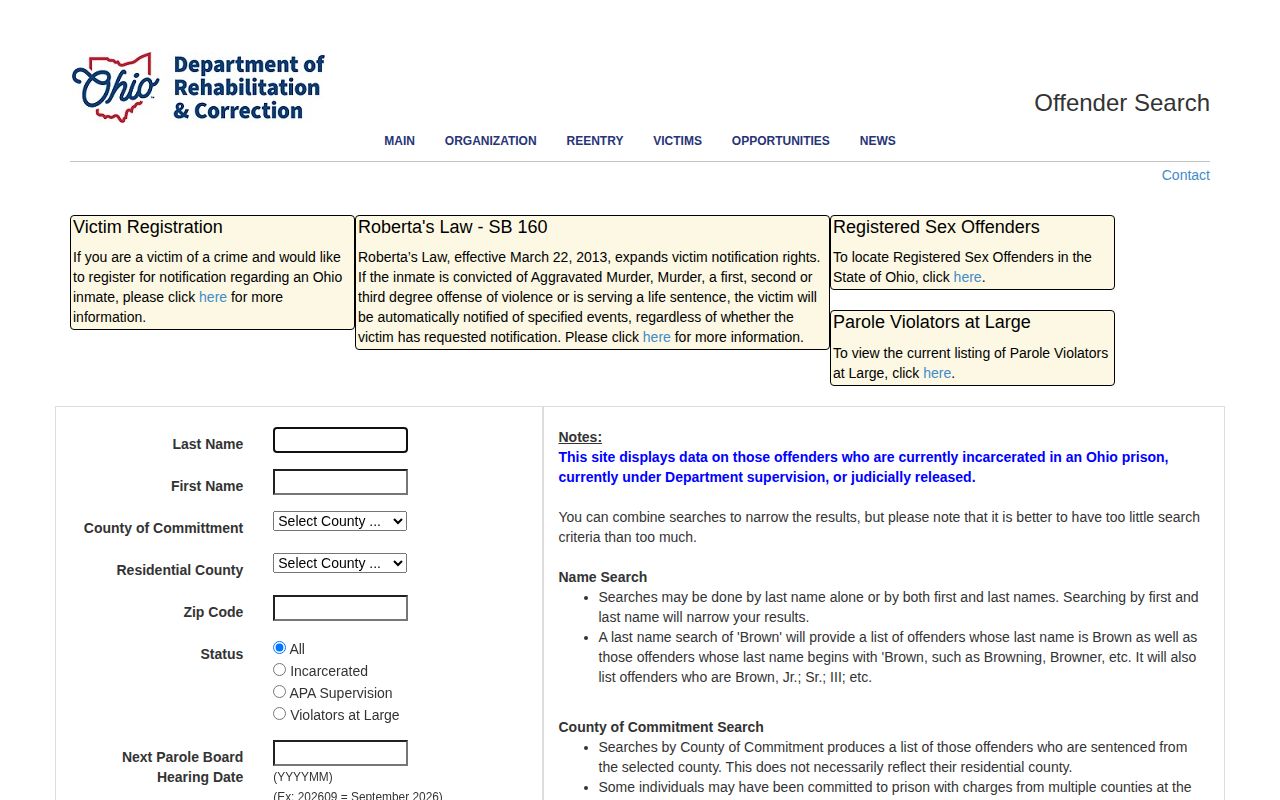
Use state search after the county trail points to DRC.
Note: A booking photograph records intake after an accusation; it does not show whether the charge was reduced, dismissed, or proved.
Request Knox County Arrest Records
The KCSO Records Division names records clerk Karen Hall. Her number is (740) 399-3904. Ask for the booking record and booking photograph, then supply the full name, approximate arrest date, agency, any known case or report number, and a preferred electronic format. Ohio's standard is prompt inspection and copies within a reasonable time. KCSO publishes no universal turnaround.
- Check the current roster and save its URL and access date.
- Identify the event by name, date, agency, and known number.
- Ask for the booking record, photo, and an electronic copy.
- Request the legal basis for redactions and all nonexempt parts.
- For old files, ask which retention series controls the item.
Black-and-white pages run free from one through 19. At 20 or more, each costs $0.15. Color pages stay free through nine, then cost $0.25 each at 10 or more. Email copies are free. A compact disc or DVD runs $2, a USB drive costs $10, and postage or large storage may add to the total. Prepayment can be required, and the office accepts checks or money orders but not cash.
Ohio Booking Photo Law
Ohio Revised Code section 149.43 sets the public records rules. Public status never wipes out protected content. An office may redact exempt information. It need not create a record that never existed, and it should cite the legal basis for anything withheld. Ask for whatever parts can be separated and released.
ORC section 2927.22 defines an Ohio booking photograph. It bars a publisher from negligently soliciting or accepting payment to remove, correct, modify, or withhold criminal-record information about the subject. In short, it is an anti-pay-to-remove law. It grants no universal takedown right. Keep any payment demand and get legal advice when needed.
The official Public Records Act text shows the statute and its exemptions.
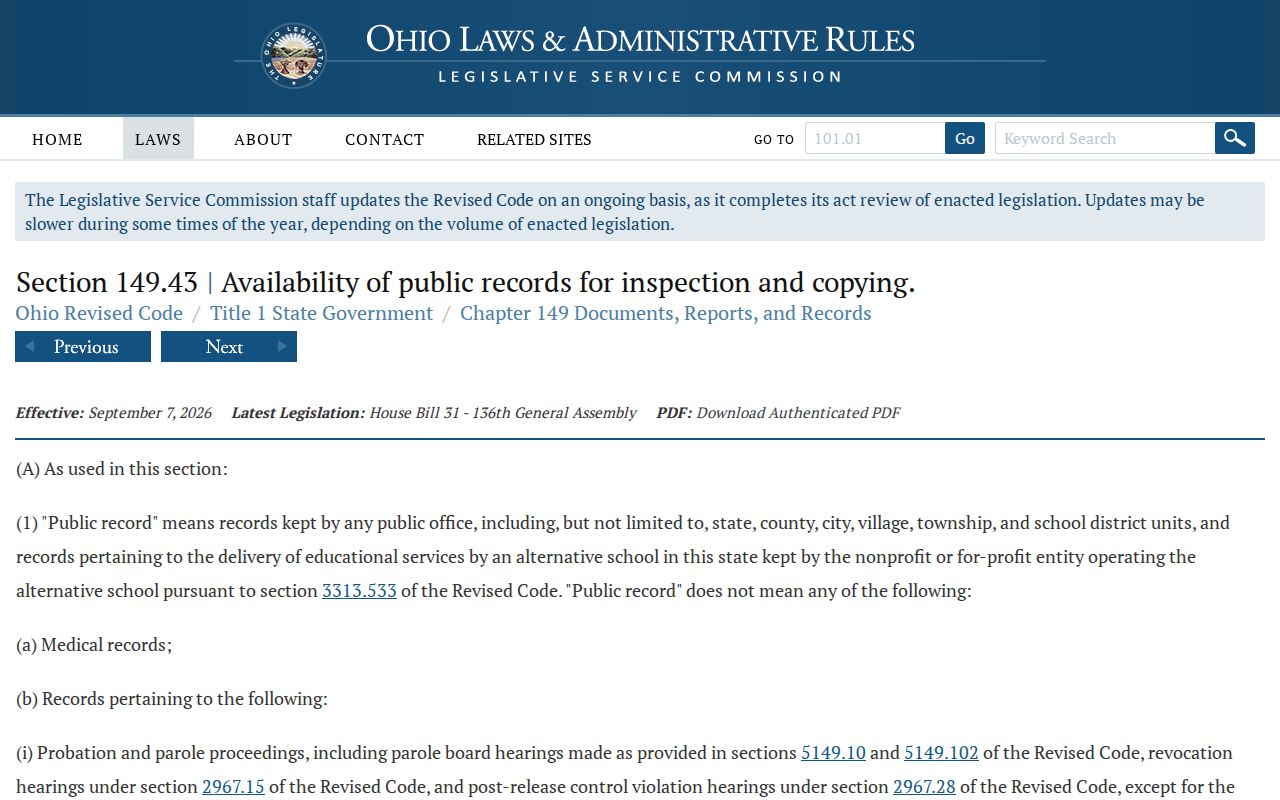
The statute is only the starting point. The office holding the Knox County record decides how it applies to your specific request.
Correcting Knox Booking Records
Corrections begin at the source. For an inaccurate KCSO entry, send records staff the PDF URL and the correct identifying facts. State the change you want. When a court seals or expunges a matter, provide the order or certified disposition. Ask how it affects the agency copy. KCSO offers no public self-service photo takedown form and promises no fixed removal schedule.
ORC section 2953.32 governs sealing and expungement. Eligibility depends on the offense. Timing turns on the disposition, waiting period, and exclusions. The Supreme Court of Ohio publishes the current forms for these cases. The KCSO clerk processed 67 such matters in 2024. It is a sign that courts drive this process rather than a routine web edit.
Unofficial publishers take their own paths. BustedNewspaper and Mugshots.zone describe free forms backed by exact URLs and court papers. Mugshots.com describes free record maintenance and says it accepts no removal payments. Arrests.org offers a contact route but no dedicated free Knox opt-out. No RecentlyBooked Knox County, Ohio page appears. Policies shift. Confirm live terms and never pay an intermediary.
The Mugshots.com maintenance page shows one documented free policy.
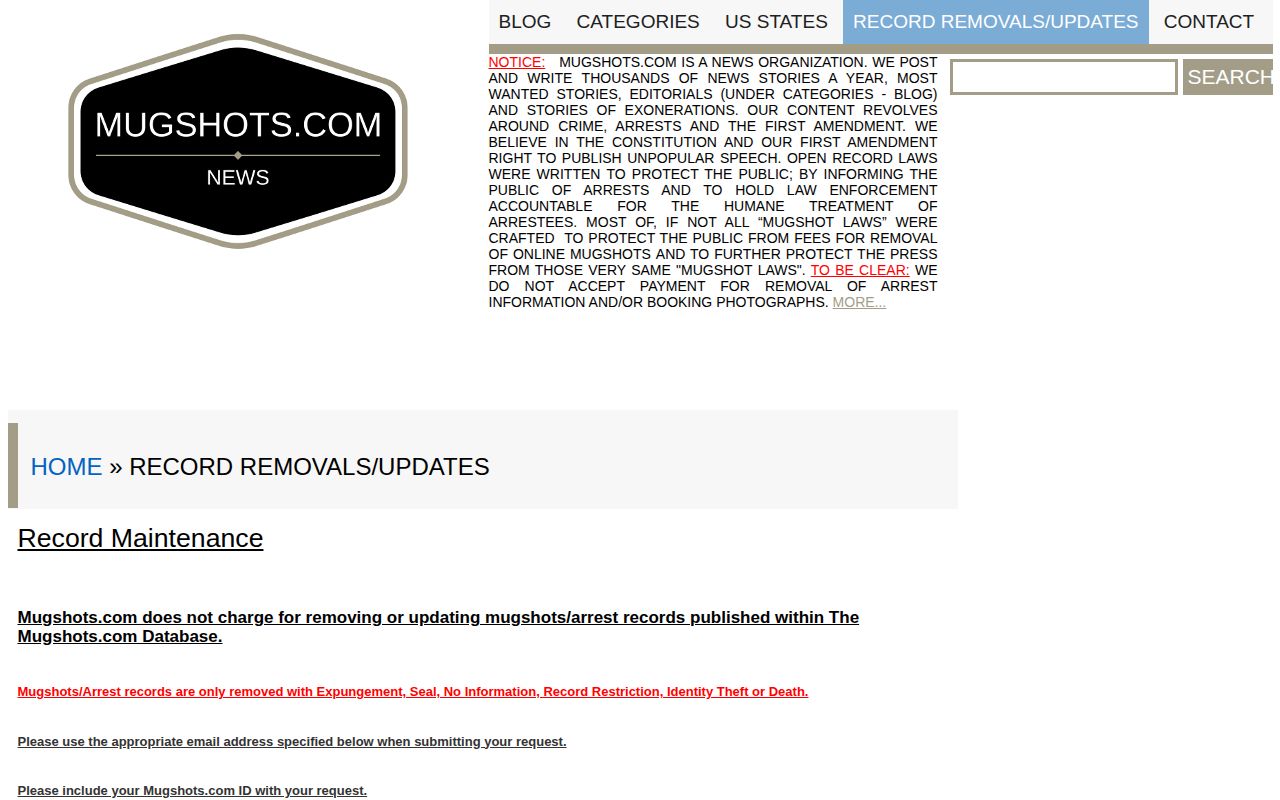
That is an operator policy, not a court order. Nor is it a promise that any entry qualifies. Google's Refresh Outdated Content tool can refresh a stale result after a source changes, but it cannot remove the source page.
Older Knox County Arrest Archives
The KCSO RC-2 schedule keeps KC-002 "Arrest Records Check" for two years. Officer daily activity logs last one year. CAD and 911 communications logs last two years. Nothing in the schedule says KC-002 covers every booking jacket, photograph, or roster PDF. Ask the clerk for specifics. Name the exact series, retention end date, destruction status, and transfer location.
The Knox County Records Center holds county material and describes closed cases on film. The center does not serve as a public booking-photo archive. Old jail questions start with KCSO. Old case questions start with the courts. Ohio History Connection explains local schedules, but a schedule alone does not prove that any Knox booking file reached the State Archives.
Note: A news page or unofficial snapshot may persist after the source changes, so compare it with the final court disposition.
Knox County Arrest Warrants
KCSO serves arrest warrants from local, out-of-county, and out-of-state courts, and it processed 571 of them in 2024. The sheriff's office publishes no warrant portal or most-wanted gallery. That gap invites misleading search results for Knox County, Tennessee, so steer around them. Skip general web searches and go to the record itself.
Start with Knox CourtView, then check Mount Vernon Municipal Court and Common Pleas records. Confirm anything you find with the issuing court or with KCSO. County pretrial staff screen several court and law-enforcement systems for warrants, holders, and detainers before any release. No single public search covers every source. The official CourtView interface is just one piece of that larger picture.
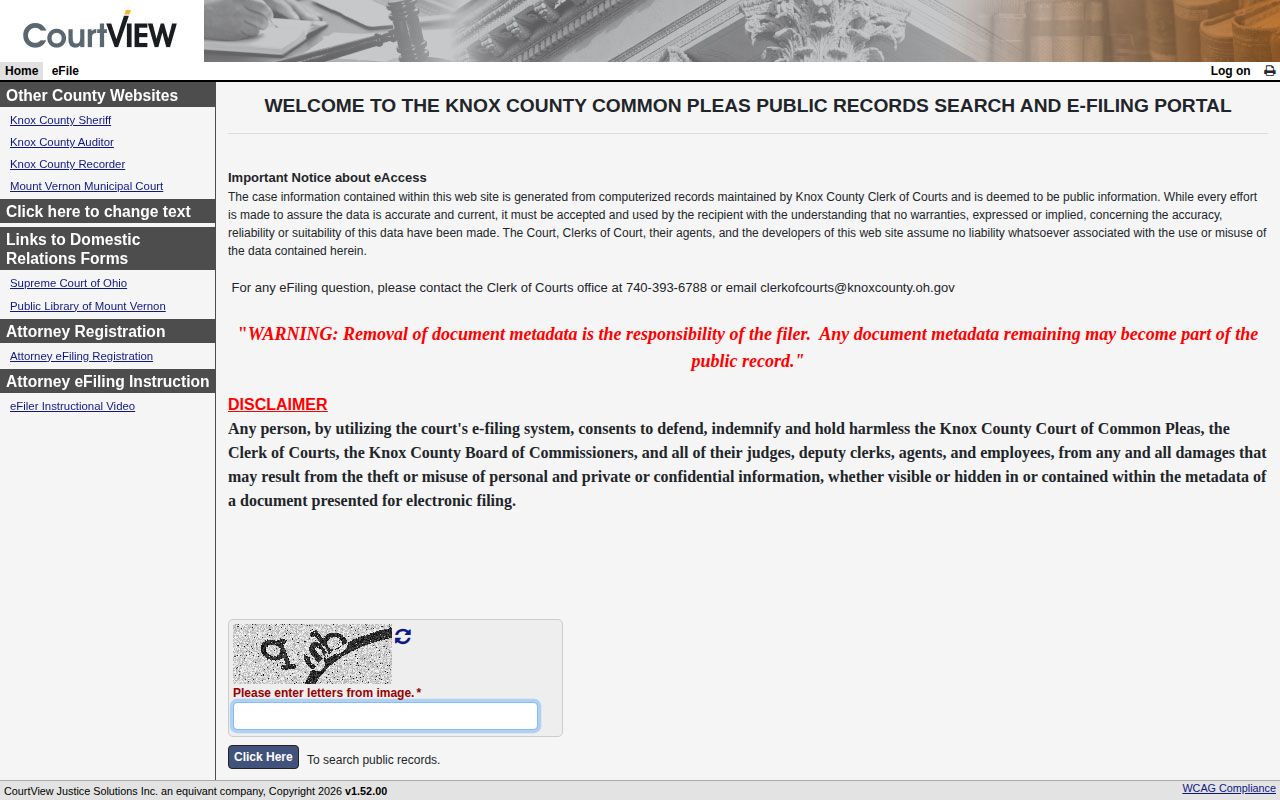
Warrants can also arise from probation, another county, or federal authority. So pair CourtView with the issuing court and KCSO before trusting a clean result.
After a Knox County Arrest
A booking opens the record trail in Knox County. From there a case may move to arraignment, bond, a preliminary hearing, indictment, a plea, dismissal, sentencing, or transfer. The charge text on the roster can differ from a later complaint or indictment, so read the filings themselves. CourtView opens public case data. Common Pleas handles felony proceedings, while Mount Vernon Municipal Court covers misdemeanors and felony initial appearances. Search by name or case number. Sealed, juvenile, and confidential matters stay out of view.
For custody alerts, VINELink Check explains how Ohio VINE registration works and where it falls short. Knox County Alerts cover weather, roads, and emergencies instead. Sheriff social posts sometimes carry wanted-person or agency news, though the office offers no booking app or mobile arrest feed.
Beyond Knox County Custody
Custody does not end at the county line. A person sentenced to an Ohio prison leaves the county roster for state DRC systems. Federal custody means federal sources. KCSO does house some federally charged inmates under a U.S. Marshals contract, but that deal creates no public USMS photo gallery. It also does not turn every federal file into a county arrest record.
The Bureau of Prisons locator covers federal inmates going back to 1982 and updates daily. It returns identifying and custody fields rather than a booking photo. Someone missing from it may still be in county jail, state prison, another federal system, released, or simply outside its coverage. ICE holds run through a separate official locator. Knox County lists no active ICE contract or local photo feed. The official BOP locator makes that federal-only boundary plain.
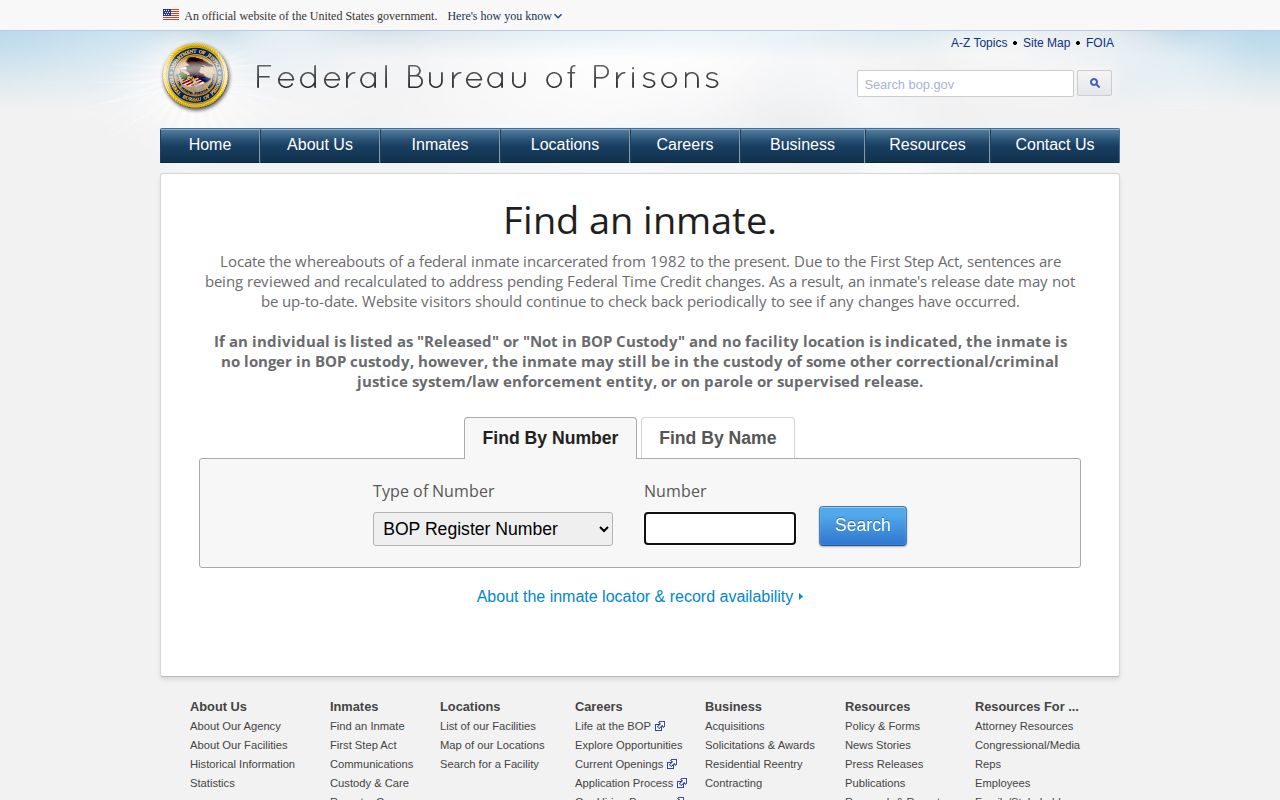
Use it alongside, never instead of, the local tools.